
• Client Testimonials
  • Case Studies
  • Blog
tqmi-logotqmi-logotqmi-logotqmi-logo
  • Home
  • About TQMI
    • Core Values TQMI
    • TQMI Growth Map
    • Management Team
    • Expert Resources TQMI
    • TQMI Expert Panel
    • TQM International Experience
    • Janak Mehta Speech
    • Dr. Kano’s
  • Why TQMI?
  • Our Specializations
    • TQM/Deming Prize
      • International Experience
      • Deming Prize Client List
      • Client speak Testimonial
      • Deming Prize FAQs
    • Business Performance Enhancement
    • ICT / Digitization Service
    • New Product Development
    • Six Sigma Lean Six Sigma
      • Six Sigma Black Belt Certification
      • Green Belt Training Certificate
      • TQMI competence
      • Six Sigma Training
        • Six Sigma and Lean Six Sigma Training Experience
      • Support
        • Diagnostic Study
        • Project Facilitation
      • Success Stories
      • Six Sigma Consulting Services
      • Six Sigma Client list
      • Six Sigma Client speak
      • Case Studies
      • Six Sigma FAQ
    • Lean
      • TQMI Competence / LEAN
      • Lean Client List
      • Lean FAQs
    • TPM
      • TPM Training India Competence
      • TPM Training Success Stories
      • TPM Training India Client List
      • TPM Training India Client Speak
      • TPM Training India FAQs
    • Advance TQM Workshop
      • Advanced TQM Workshop 2026
      • Advanced TQM Workshop Client Testimonials
    • Data Science
      • Data Science Overview
      • Basic Python for Data Science
      • Exploratory Data Analysis
    • Industry 4.0
      • Industry 4.0 Workshop
    • SCEI
    • Value Creation
  • TQMI Knowledge Center
    • Six Sigma/Six Sigma knowledge sharing
    • Business Process Reengineering
    • TQMI Management Glossary
    • TQMI Case Studies
  • TQMI News & Events
  • TQMI Gallery
  • Contact Us
  • Home
  • About TQMI
    • Core Values TQMI
    • TQMI Growth Map
    • Management Team
    • Expert Resources TQMI
    • TQMI Expert Panel
    • TQM International Experience
    • Janak Mehta Speech
    • Dr. Kano’s
  • Why TQMI?
  • Our Specializations
    • TQM/Deming Prize
    • Business Performance Enhancement
    • ICT / Digitization Service
    • New Product Development
    • Six Sigma Lean Six Sigma
    • Lean
    • TPM
    • Advance TQM Workshop
    • Data Science
    • Industry 4.0
    • SCEI
    • Value Creation
  • TQMI Knowledge Center
    • Six Sigma/Six Sigma knowledge sharing
    • Business Process Reengineering
    • TQMI Management Glossary
    • TQMI Case Studies
  • TQMI News & Events
  • TQMI Gallery
  • Contact Us
DMAIC Model: How to Use It for Problem Solving
  • Home
  • TQMI News & Events – Latest Updates, Announcements & Insights
  • Blogs 6 Sigma
  • DMAIC Model: How to Use It for Problem Solving
How Does Business Process Reengineering Help Transform Business?
March 31, 2017
Why and How to Jumpstart Your Sales Coaching Efforts
April 19, 2017
Published by Deepak Bansal on April 11, 2017
Categories
  • 6 Sigma
  • Blogs
  • Quality Management Strategies | TQMI Blog
Tags
  • 6 Sigma
  • DMAIC
  • Expert Insights on Quality Management Principles | TQMI Blog

How To Use The DMAIC Model For Problem Solving?


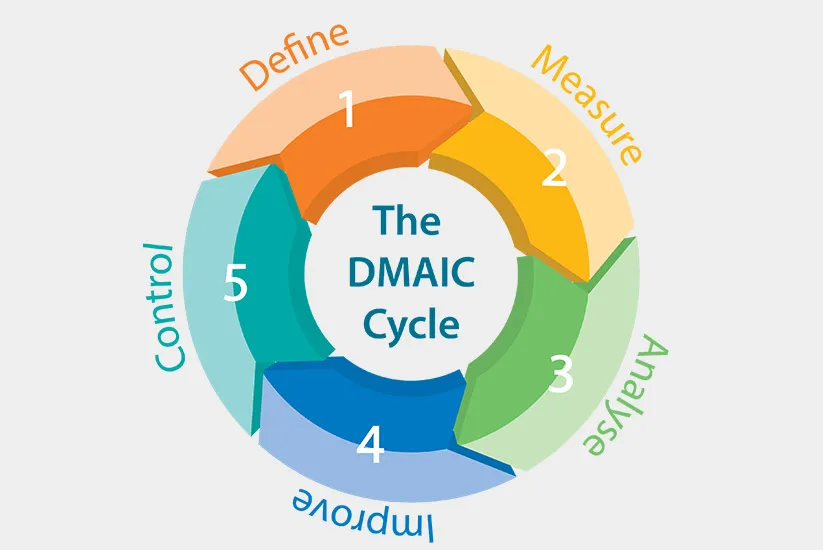
It is very easy to point fingers at and blame someone else for a problem that has occurred. This has become one of the easiest ways of getting away with understanding why the problem has actually occurred, in today’s world. However, this is not the right way of solving a problem, especially not in the corporate world. If you are looking for the right way to analyze, identify, and solve a problem that occurs in your workplace, you must opt for a more positive concept like DMAIC – Define, Measure, Analyze, Improve, and Control.

The DMAIC concept was first created at Motorola in the early eighties, which helped the company earn the Malcom Baldrige National Quality Award in 1988. Slowly and steadily, different companies started using this method, which rapidly gained adoption in teaching thousands of employees how to rightly solve problems by improving processes that were causing those problems. Today, hundreds of companies are using this concept to ensure that they meet the quality expectations of customers effectively and efficiently, thus making it the best way to solve a problem.

Define


This is the first phase of the DMAIC concept, where the problem is defines. It is defines as a question or a situation that calls for a solution. It is very important to clearly define a problem by calculating the frequency of problem occurrence, and the rate of impact when it occurs. Although there are many ways to solve a single problem, but the best approach it to follow the method of DMAIC, and start by defining the problem first.

Measure


This phase establishes the current baseline as the basis for improvement. In this stage, data is collected to establish process performance baselines. This will be compared to the performance metrics at the conclusion of the project to determine whether significant amount of improvement has been made or not.

Analyze


This phase helps to identify, validate, and select the root cause of the problem that needs to be eliminated. Multiple potential root causes are identified via the root cause analysis, out of which the most valid root causes are identified. In this phase, the focus shifts from the effects of the problem to the causes, which are known as factors. This phase is important because it becomes much easier to fix a problem when the root causes are known.

Improve


When you reach this stage, you are ready to generate solutions to the problem. This is where critical thinking techniques need to be applied. The thinking capacity needs to be shifted from the basic thinking techniques to variations of brainstorming like Reverse Thinking, Random World, and Morphological Box. All of these techniques are designed to view a problem through a completely fresh perspective.

Control


This is the last phase of the DMAIC concept that deals majorly with change management. Not all of us are very comfortable with change, which is why any change brought about also brings up quite a lot of resistance. This is why this phase is important as it deals with necessary steps required to maintain the profits made by solving a problem. If this stage is missed out, it is very likely that problems can return back in some time to what they were before.

Using this concept of DMAIC in your workplace, you will definitely help all those working in your organization to determine the right thing to do and ort out problems without blaming or pointing out a finger at someone. You can learn in detail about how to apply DMAIC and other such positive and rewarding concept in your organization by getting in touch with TQMI to achieve its professional and reputed Lean Six Sigma Certification in India.

Share
0
Deepak Bansal
Deepak Bansal

Leave a Reply Cancel reply

Your email address will not be published. Required fields are marked *

Related Tags
6 Sigma DMAIC Expert Insights on Quality Management Principles | TQMI Blog
  • Training at TATA Motors — Led by Mr. Anil Sachdev
    May 6, 2022
  • 0
    The Remarkable Leadership Legacy of Mr Rahul Bajaj in Indian Industry
    February 23, 2022
  • 0
    Data Analytics That Drives Remarkable Efficiency Gains for Manufacturers
    February 23, 2022
  • 0
    What is Total Quality Management (TQM) and Where Can it be Applied?
    February 2, 2022
  • 0
    3 Powerful Ways Data Analytics Transforms Indian Manufacturing
    February 1, 2022

Categories

  • 5S
  • 6 Sigma
  • Blogs
  • BPE Archives – TQMI
  • BPE Archives – TQMI
  • Datascience
  • Healthcare
  • Industry 4.0
  • Manufacturing
  • news
  • News & Events
  • Policy Management
  • Quality Management Strategies | TQMI Blog
  • Retail Industry Archives – TQMI
  • Service Industry Insights & Quality Management Blog | TQMI
  • Texile Industry
  • TQM
  • Training

Categories

  • 5S
  • 6 Sigma
  • BPE Archives – TQMI
  • BPE Archives – TQMI
  • Datascience
  • Healthcare
  • Industry 4.0
  • Manufacturing
  • Policy Management
  • Quality Management Strategies | TQMI Blog
  • Retail Industry Archives – TQMI
  • Service Industry Insights & Quality Management Blog | TQMI
  • Texile Industry
  • TQM
  • Training

Tags

5S 6 Sigma Accounting Firms Blackbelt BPE Archives - TQMI BPE Archives - TQMI Daily Work Management Data Analytics Data Fabric Data Management DataScience Digitalization DMAIC Dr. Kano DWM Expert Insights on Quality Management Principles | TQMI Blog Goals Greenbelt Healthcare Industry 4.0 Manufacturing Policy Management Quality Management System Retail Industry Archives - TQMI Risk Management Service Industry Insights | Quality & Improvement For Service Businesses – TQMI SIRI Six Sigma Texile Industry TQM TQM program by Dr Noriaki Kano
Get In Touch
TQM International Pvt. Ltd.
709, Vipul Business Park
7th Floor, Opposite S D Adarsh Vidhyala
Near Tikri More, Main Sohna Road,
Sector 48, Gurgaon – 122018
Telephone +91-124-4968989
mobile 09560510088
emailemail
Feedback
Feedback
Feedback
Feedback

Quick Links

  • About TQMI
  • Why TQMI
  • TQM / Deming Prize
  • Business Performance Enhancement
  • ICT Solutions
  • New Product Development
  • Six Sigma
  • Lean
  • TPM
  • Advance TQM Workshop
  • Data Science
  • Industry 4.0
  • Industry 4.0 Workshop

Quick Links

  • 4esoftware
  • Caizin
  • Knowledge center
  • Management team
  • Clients Speak
  • Projects
  • Case Studies
  • Blog
  • Glossary
  • News & Events
  • Gallery
  • Contact Us
  • Privacy Policy

Newsletter

Copyright © 2021 - TQM International | All Rights Reserved.

Let us reach out to you


    Use social media for ease


    Let us reach out to you


    hbspt.forms.create({ region: "na1", portalId: "8648325", formId: "60b9f37d-c567-48f1-a58f-a241e8283495" });
    null

    LIMITED OFFER!

    10% Instant discount for the team member of six

    Learn about the latest advances in TQM methods and its application

    Register Now

    Let us reach out to you


    hbspt.forms.create({ region: "na1", portalId: "8648325", formId: "c76bf870-9c0e-44ff-8e8c-c6511a485ec1" });

    WhatsApp us

    ×

    We don't do
    goodbyes

    We do see you later.

    In case, if you want to chat with
    us we are one step away.

    Let's Chat

    No, Thanks!